
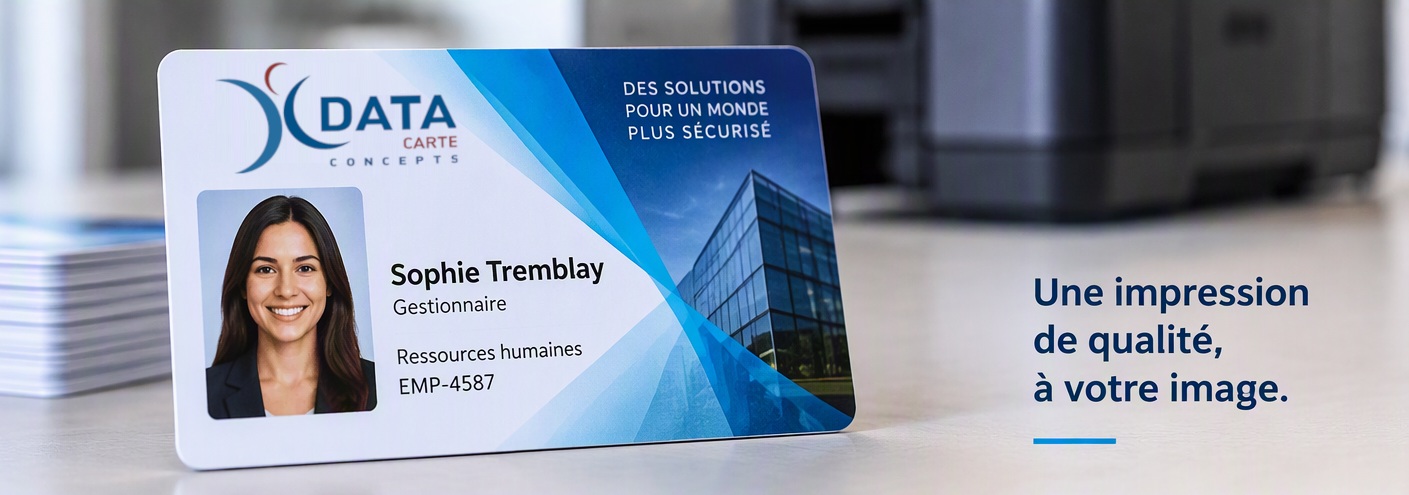
Why Card Quality Is Just as Important as Printer Quality
When discussing ID card printing, it is common to focus on selecting the right printer, ribbons, or personalization software. However, one equally important element is often overlooked: the quality of the cards themselves.
Not all cards used for printing are created equal. The materials, surface finishes, and manufacturing processes have a direct impact on print quality. They also influence the durability and reliability of the final result. Card composition, the layers that make up the card, and embedded technologies such as chips or RFID antennas all affect printing performance. To achieve the best results, it is recommended to use high-quality cards manufactured to rigorous specifications.
High-Quality Card Surfaces for Optimal Printing 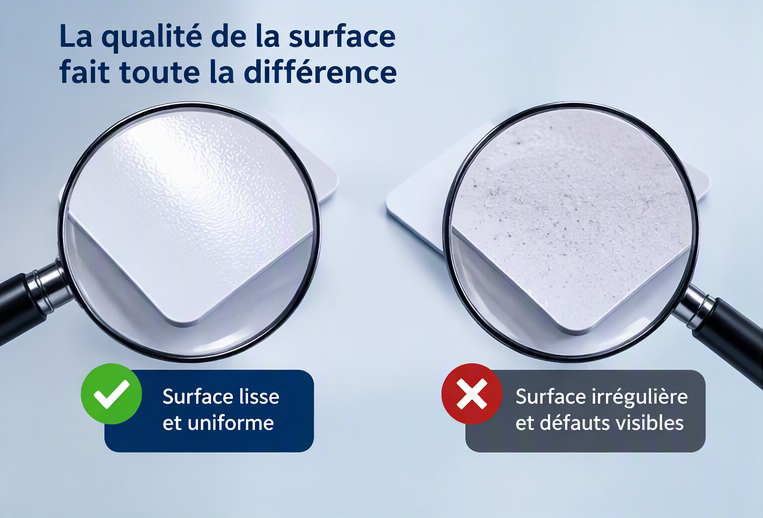
The surface of a card plays a major role in the visual quality of the printed result. A smooth surface with a polished or satin finish promotes better adhesion of the printed layers. It also helps produce consistent colors and a professional finish. In contrast, an irregular or matte surface can visibly reduce print quality.
Manufacturing defects such as bumps, pits, burrs, or other surface irregularities can also cause white spots or printing defects. Even when cards are produced using quality manufacturing processes, some irregularities may still occur and affect the final result.
Card Composition Impacts Performance
Not all PVC cards are the same. In fact, the materials used, additives present in the plastic, and the internal structure of the card directly influence several factors:
- Print sharpness
- Adhesion of protective layers
- Card durability
- Wear resistance
- Long-term color stability
Lower-quality cards may experience delamination or warping over time. They may also release additives to the surface. As a result, their lifespan decreases and the risk of printing issues increases.
Clean Cards Are Essential
Dust, debris, and residue on card surfaces can lead to visible printing defects. These contaminants sometimes originate during manufacturing, transportation, or handling. They create imperfections and can accelerate wear of the printed surface.
Improper handling can also affect print quality. Furthermore, natural oils from fingers may reduce print adhesion. They can also negatively impact the appearance of the finished card.
Proper Card Storage Matters
To preserve their properties, cards should be stored in a clean, dry, temperature-controlled environment. Prolonged exposure to heat, humidity, or direct sunlight can alter the materials and affect print quality. Best practices recommend using cards at room temperature and keeping them in their original packaging until they are needed.
Data Carte Concepts’ Commitment to Quality 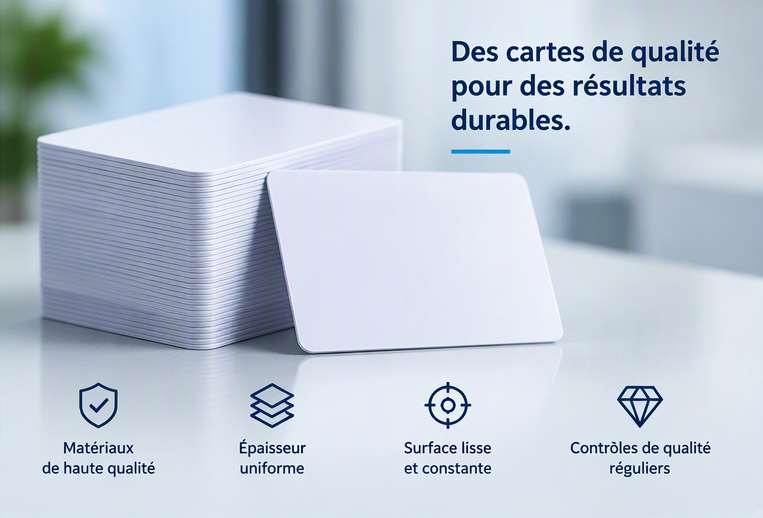
At Data Carte Concepts, quality is at the heart of everything we do. Whether for our standard plastic cards or our technology-enabled smart cards, we work with trusted manufacturers recognized throughout the industry.
In addition, we apply rigorous supplier selection criteria to ensure our cards are reliable, durable, and well suited for professional environments.
We also perform regular quality control inspections on our products to verify card conformity, surface condition, manufacturing quality, and printing performance. Through this ongoing commitment, we reduce printing issues, improve card durability, and enhance the overall customer experience.
The quality of PVC cards remains one of the most important factors in achieving consistent, durable, and professional print results.
A high-performance printer delivers its best results when paired with a high-quality card. That is why we always recommend using reliable, consistent cards that meet industry best practices.